
We Are Committed.
Every fabric leaves a footprint.
At Pranera, sustainability isn’t treated as a separate initiative. It is built into how we source materials, engineer fabrics, manage manufacturing, and continuously improve every stage of production.
Built Into Every Decision, Not Added Afterwards.
At Pranera, sustainability is not something we add after a fabric is made. It is built into the decisions we make before, during and after production — from the materials we source to the way we use water, energy and raw materials, and ultimately, how long a fabric performs.
Our approach is simple: make better use of resources, reduce avoidable impact, and create fabrics that deliver lasting value.
That means looking closely at the choices behind every metre of fabric and continuously finding better ways to manufacture it.
Our responsibility is to make that footprint lighter without compromising the performance, durability, and reliability our customers depend on.
Responsible Manufacturing
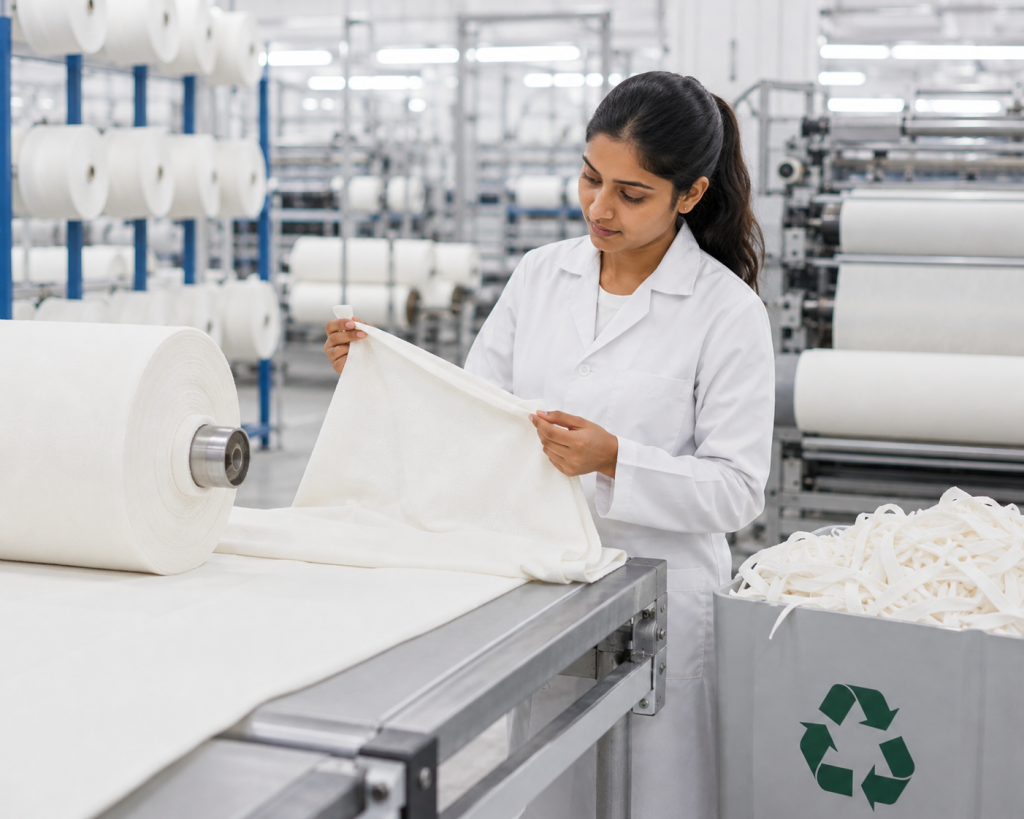
Every stage of manufacturing presents an opportunity to improve how we work, how we use resources, and how we impact the environment.
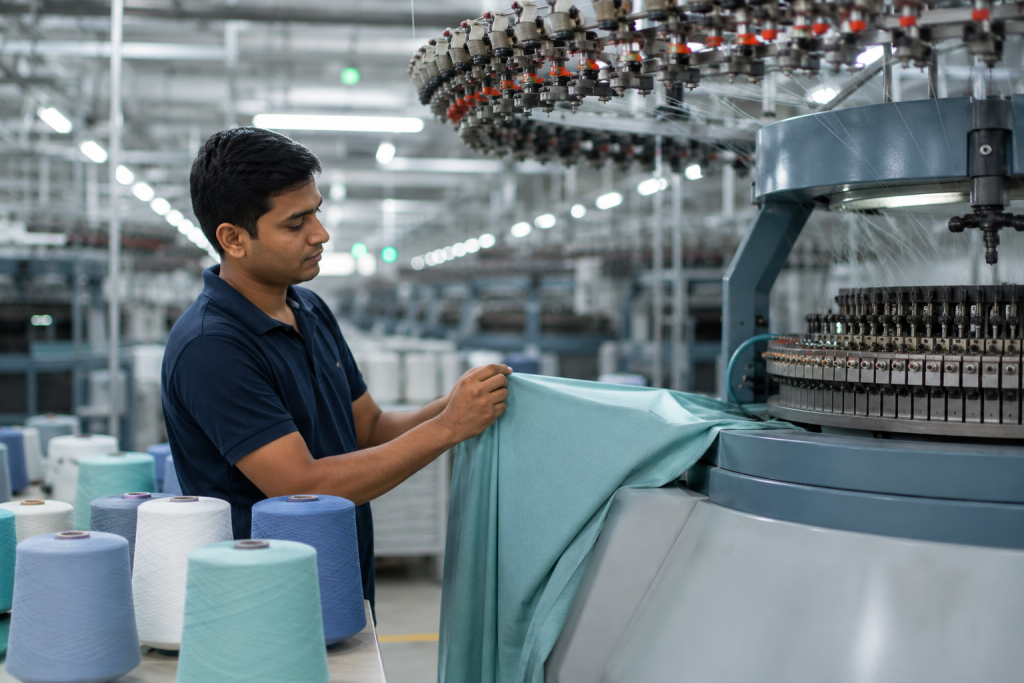
At Pranera, we continuously refine our knitting, dyeing, finishing and quality processes to improve operational efficiency while responsibly managing water, energy and raw materials. Where possible, we look for manufacturing methods that reduce resource consumption without compromising the performance and consistency of the fabric.
Our environmental approach also extends to how we manage water within our manufacturing ecosystem, including Zero Liquid Discharge (ZLD) practices that help eliminate the discharge of treated industrial wastewater. We also explore technologies and materials that can reduce the environmental load of conventional processes including dope-dyed yarns, where colour is incorporated into the fibre before it is spun and knitted, reducing the need for conventional fabric dyeing and the associated water usage.
Because responsible manufacturing is not one big change. It is hundreds of better decisions made consistently.
Quality Is Part of Sustainability
Sustainability isn't only measured by how a fabric is produced. It is also reflected in how long that fabric performs.
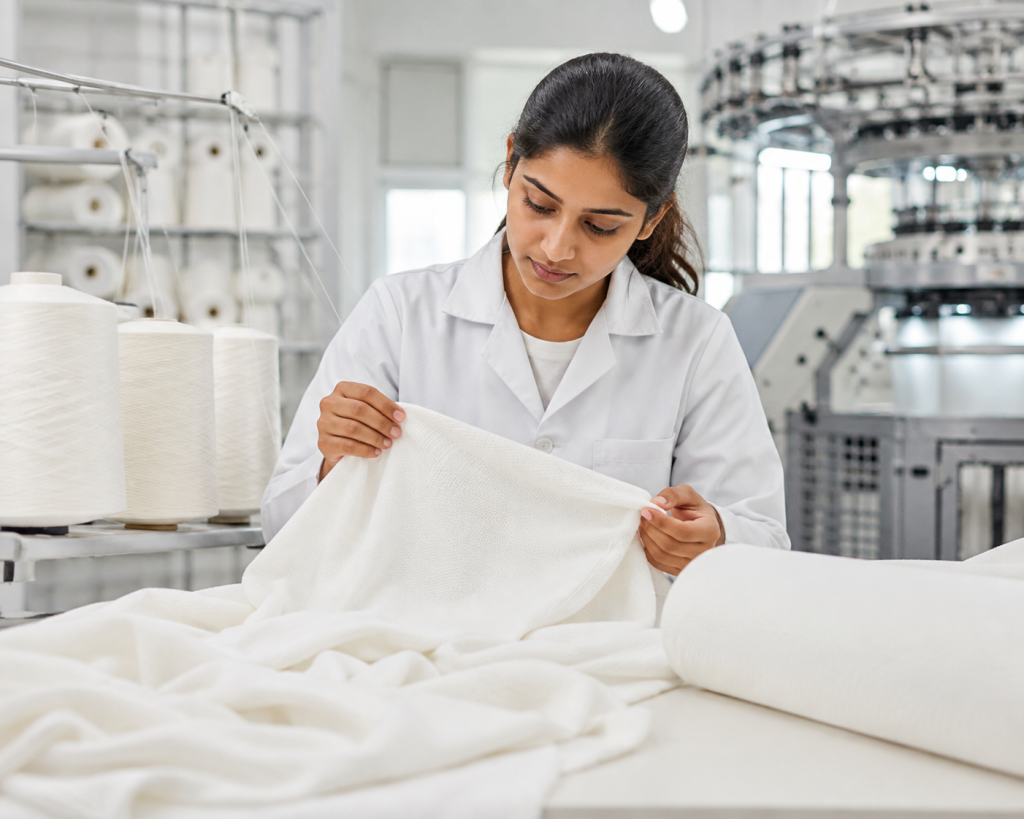
A fabric that retains its colour, shape, comfort and performance for longer can help reduce premature replacement and extend the useful life of the garments made from it. That means greater value from the resources invested in every metre of fabric.
At Pranera, quality assurance is therefore an important part of our sustainability approach. Fabrics undergo stringent testing and roll-level inspection to maintain the consistency, durability and performance our customers expect.
We believe making something that lasts is itself a responsible manufacturing decision.
Responsible Sourcing
Every fabric starts long before it reaches our production floor.
We work with suppliers who share our expectations around quality, responsible business practices, environmental responsibility and regulatory compliance. We believe that responsible manufacturing cannot stop at our factory gates; it has to extend across the supply chain.
Our sourcing decisions are supported by recognised standards and certifications where relevant. OEKO-TEX®, GOTS and GRS help us make more informed choices around materials, chemical safety, organic fibres and recycled inputs. These certifications are not simply badges for us to display. They form part of a broader framework that helps us evaluate the materials and partners behind the fabrics we create.

Resource Efficiency
Water, energy, fibres, dyes and raw materials all have a role in creating a fabric. Using them thoughtfully is central to how we approach manufacturing.
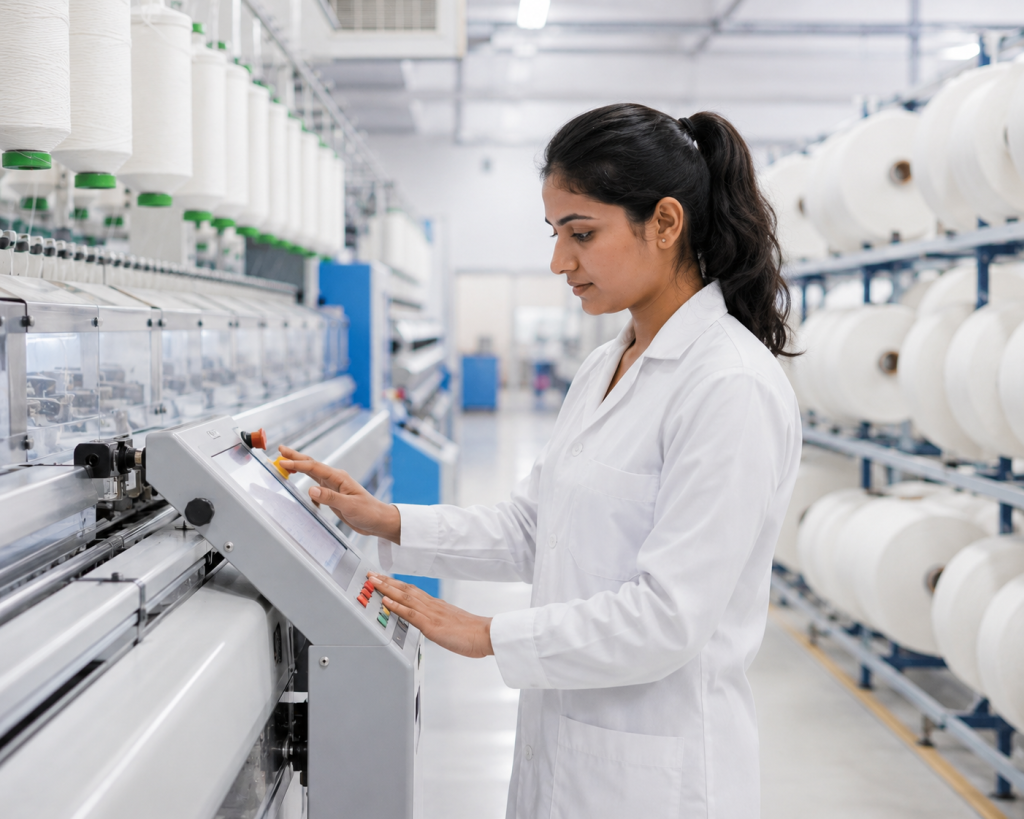
At Pranera, we continuously look for ways to improve resource efficiency across fabric development and production. This includes optimising processes, reducing avoidable consumption and exploring manufacturing alternatives that can deliver the same performance with a lower resource requirement.
Our use of dope-dyed yarns is one example. By adding colour to the polymer solution before the yarn is formed, the conventional dyeing stage can be reduced or avoided for suitable applications, helping reduce water consumption and the associated processing requirements.
Alongside this, our approach to water management, including ZLD systems, supports greater responsibility in how industrial water is treated and managed.
Resource efficiency is not about using less at any cost. It is about using resources smarter while maintaining the quality our customers depend on.
Waste Reduction
Waste reduction begins with understanding where waste happens and how we can prevent unnecessary materials and resources from becoming waste.
Across our manufacturing processes, we continuously evaluate material utilisation, production planning, process efficiency and quality performance to reduce avoidable losses. Better planning helps us use raw materials more effectively. Consistent quality reduces unnecessary rejection. More efficient processes help us create greater output from the resources already invested.
We also look at waste reduction beyond production itself. By developing durable fabrics and incorporating recycled materials where appropriate, we aim to keep valuable resources in use for longer. Our GRS-aligned material choices, where applicable, support the responsible use and traceability of recycled inputs, while our quality-led approach helps ensure that the resulting fabrics still meet the performance standards expected from Pranera.
Because sustainability is not only about what we put into production. It is also about what we prevent from becoming waste.
CERTIFICATIONS
Independently Verified. Globally Recognised.
Responsible manufacturing should be supported by recognised standards. Our certifications demonstrate our commitment to producing textiles that meet globally accepted benchmarks for product safety, responsible sourcing and sustainable manufacturing practices. They provide our customers with confidence that the fabrics they choose are manufactured with transparency, accountability and care.
OEKO-TEX® STANDARD 100
Safety That Begins With What Touches You
At Pranera, we believe that fabric quality is not only about how it looks, feels, or performs. It is also about what goes into making it and how safe it is for the people who wear it.
That is why we place strong importance on OEKO-TEX® STANDARD 100, one of the globally recognised textile safety standards for testing harmful substances. Certified textiles are rigorously tested against a comprehensive list of potentially harmful substances, with requirements determined by how the textile is intended to be used and how closely it comes into contact with the skin.
Designed With Human Safety in Mind
Our fabrics are developed with the understanding that uniforms are worn for long hours, often every day. From school uniforms to corporate, hospitality, healthcare and workwear, textiles stay close to the wearer throughout their routine.
OEKO-TEX® STANDARD 100 provides an additional level of confidence by testing certified textile articles against stringent limits for harmful substances, with stricter requirements where skin contact is more intensive.
At Pranera, we see textile responsibility as a continuous process — from fibre and yarn selection to knitting, dyeing, finishing and final quality inspection. OEKO-TEX® STANDARD 100 strengthens this approach by giving us an internationally recognised framework for textile safety and harmful-substance testing.
Because better fabric isn't only about performance. It is about creating confidence in every layer.
Why OEKO-TEX® Matters to Pranera
Safer Textile Choices
We pay close attention to the substances and materials involved in textile production, with human safety considered alongside fabric performance.
Tested Against Stringent Requirements
OEKO-TEX® STANDARD 100 uses globally standardised testing criteria and regularly reviews its requirements and limit values in line with scientific and regulatory developments.
Confidence for Everyday Wear
Our fabrics are created for products that are worn repeatedly and for extended periods. Safety therefore remains an important part of how we evaluate and develop our textiles.
Responsible Quality Beyond Appearance
A fabric should do more than look good and perform well. It should also meet meaningful standards for the people who ultimately wear it.
GLOBAL RECYCLED STANDARD (GRS)
Giving Materials a Second Life
Sustainability in textiles begins with rethinking what we use, how we use it, and what happens to those materials over time.
At Pranera, we are actively moving towards more responsible material choices by incorporating recycled polyester into our textile portfolio. By using recycled inputs, we can reduce our reliance on virgin resources and give existing materials another purpose within the textile value chain.
Our approach is supported by the Global Recycled Standard (GRS), an internationally recognised standard designed to verify recycled content and trace its movement through the supply chain. GRS also establishes requirements covering environmental and social practices and chemical management during processing.
Sustainability With Traceability
For Pranera, recycled polyester is not about making a sustainability claim simply because a recycled material is involved. It is about knowing where that material comes from and maintaining accountability as it moves through manufacturing.
The GRS chain-of-custody system helps track certified recycled material through the supply chain, providing greater transparency from recycled input to finished textile. Independent third-party certification is used to verify compliance.
Why We Prioritise Recycled Polyester
Reducing Dependence on Virgin Resources
Using recycled polyester allows existing polymer-based materials to be brought back into productive use, helping reduce the need for continually relying on new raw materials.
Supporting a Circular Textile Economy
Instead of viewing materials as something used once and discarded, recycled polyester supports a more circular approach — keeping valuable material within productive use for longer.
Verified Recycled Content
GRS provides a framework for verifying recycled inputs and maintaining traceability through the certified supply chain, helping make sustainability claims more credible and accountable.
From Recycled Material to Responsible Fabric
As textile production grows, so does the importance of making smarter material decisions. From material selection and traceability to manufacturing and quality, we continue to look for opportunities to reduce unnecessary resource consumption while maintaining the performance, durability and consistency our customers expect.
Because the future of textiles isn't only about making better fabrics. It's about making better use of what we already have.
GLOBAL ORGANIC TEXTILE STANDARD (GOTS)
We Choose to Start Better.
The choices behind a fabric matter just as much as the fabric itself. When we work with organic textiles, we look beyond the fibre. We consider how it is sourced, processed, dyed, finished and moved through the supply chain. The Global Organic Textile Standard (GOTS) gives us a recognised framework to uphold that approach.
GOTS is one of the world’s leading standards for organic textiles. It verifies the use of organically produced fibres while setting requirements for environmental management, chemical use, social responsibility and traceability.
Organic Is Only the Beginning
We don’t see organic fibre as the finish line. It is where better textile production should begin. GOTS certification requires more than simply using organic material — the processes that transform that material into fabric must also meet defined requirements. That means paying attention to:
The Materials We Start With
GOTS-certified textiles use organically produced fibres that meet recognised organic standards. This gives us a more responsible foundation for developing the fabric.
The Chemistry Behind the Fabric
Textile processing involves chemicals, particularly during dyeing and finishing. GOTS places strict controls on the chemical inputs permitted in certified production.
The Impact of Processing
Manufacturing a textile uses water, energy and other resources. GOTS includes requirements for environmental management and wastewater treatment.
The People Behind the Product
A sustainable textile cannot be separated from the people who make it. GOTS incorporates social criteria covering working conditions and fundamental labour rights.
Knowing Where It Comes From
Traceability is a critical part of GOTS. Certified materials and processes are tracked through the supply chain, from organic fibre to finished textile.
Building Better From the Beginning
Our approach to textile manufacturing is constantly evolving. We continue to explore materials, processes and certifications that can help us make more responsible choices without compromising the quality and performance our fabrics are expected to deliver.
ZERO LIQUID DISCHARGE (ZLD)
What We Take From Water, We Don't Give Back as Waste.
Water is an essential part of textile manufacturing, particularly during dyeing. It is also one of the areas where responsible manufacturing can make the greatest difference.
That is why our dyeing processes incorporate Zero Liquid Discharge (ZLD), a wastewater management approach designed to ensure that no liquid effluent is discharged from the facility into the surrounding environment. The remaining concentrated wastewater is further processed, including through evaporation, so that liquid discharge is eliminated.
Dyeing generates wastewater containing colour, dissolved salts, chemicals and other residues. The wastewater is collected and treated before being taken through further recovery and concentration stages. Water is recovered wherever possible, while the remaining concentrated stream is processed through evaporation and related systems rather than being discharged as liquid effluent.
The objective is simple: no liquid wastewater leaves the facility.
Why We Choose ZLD
Protecting Surrounding Water Systems
By eliminating liquid effluent discharge, ZLD helps prevent treated or untreated industrial wastewater from entering nearby water bodies and surrounding environments.
Recovering Water Instead of Losing It
Water recovered through the treatment process can be returned to appropriate parts of the operation, reducing the need for fresh water in the overall system.
Reducing the Environmental Burden of Dyeing
Dyeing is one of the most water-intensive stages of textile production. Managing its wastewater responsibly reduces the environmental impact of manufacturing.
Making Every Drop Work Harder
ZLD encourages us to think of water as a resource that should be recovered and reused wherever technically possible rather than consumed and discarded.
Controlling What Leaves Our System
With no liquid effluent discharge, wastewater remains within a controlled treatment and recovery cycle instead of becoming a direct liquid waste stream.
Sustainability That Happens Inside the Factory
For us, sustainability isn’t only about the materials we use in a fabric. It is also about what happens during the process of making it. Our approach to dyeing considers the entire water cycle — use, treatment, recovery and reuse. It requires greater investment in treatment infrastructure, recovery systems and process management, but responsible manufacturing sometimes means choosing the more demanding process because it creates a better long-term outcome.
Zero Liquid Discharge isn't simply about eliminating discharge. It's about changing the way water is managed inside textile manufacturing.
DOPE-DYED FABRICS
Colour That Starts Before the Yarn.
Colour is usually added to fabric after it has been made. We take a different approach with our dope-dyed fabrics. Instead of manufacturing a plain yarn and then putting it through a conventional dyeing process, the colour is added to the polymer melt before the yarn is spun.
The coloured polymer is then extruded into yarn, which is subsequently knitted into fabric. This means the traditional aqueous dyeing stage can be avoided altogether — reducing the environmental load associated with one of the most resource-intensive stages of textile manufacturing.
Less wet processing. Less wastewater. Less water dependency.
Why We See Value in Dope Dyeing
Significantly Lower Water Requirement
By eliminating the conventional aqueous dyeing stage, dope dyeing can substantially reduce the amount of process water associated with coloration.
Reduced Wastewater Generation
With colour incorporated into the polymer itself, the coloured wastewater stream from dye baths and washing is largely avoided.
Lower Chemical and Dye Loss
The colourant becomes part of the polymer during spinning rather than being applied and subsequently washed, reducing extensive washing and rinsing.
Lower Energy Demand in Colouration
Removing conventional dye-bath heating, washing and drying stages can reduce the energy required for coloration.
Colour That Stays With the Fibre
Because the pigment is incorporated into the polymer, dope-dyed yarns can offer strong colour retention and resistance to fading.
More Consistent Colour
Introducing colour before the yarn is formed supports consistent coloration throughout the yarn and uniformity across the fabric.
A Different Approach to Water Stewardship
Water is one of the biggest considerations in textile manufacturing. So rather than only looking for ways to treat wastewater after dyeing, we also look at whether certain wastewater-intensive processes can be reduced at the source. Dope dyeing allows us to address the problem before the dye bath exists. That is what makes the process particularly valuable from a sustainability perspective. It works alongside our wider approach to water management including Zero Liquid Discharge (ZLD) by reducing the amount of water and wastewater generated in the first place.
Sustainability Through Process Innovation
Dope-dyed yarns allow us to rethink how colour enters a textile — moving from dyeing the finished yarn or fabric to building the colour into the yarn from the beginning. The result combines colour performance, consistency and durability with significantly reduced water dependence during coloration.
Sometimes, the most sustainable step isn't treating more waste. It's creating less of it in the first place.
LOOKING AHEAD
The Future We're Weaving
Every decision we make today shapes the textiles of tomorrow. As the industry evolves, so does our responsibility to manufacture with greater purpose, transparency and care.
Leading Textile Innovation for Over Two Decades
Our experience has shaped our understanding of performance fabrics, manufacturing excellence, and evolving industry needs.
Engineering Fabrics for Tomorrow
Driven by innovation, we continuously develop fabric solutions that combine performance, durability, and everyday functionality.
A Partner Trusted to Deliver
Long-term relationships are built on consistency, reliability, and the confidence that every order meets the standards our customers expect.
Building Trust through Transparency
From raw materials to finished fabrics, we believe our customers deserve confidence in how their textiles are produced.
Committed to Continuous Progress
Every improvement we make today strengthens the products, partnerships, and possibilities of tomorrow.
Investing in What's Next
New technologies, better processes and continuous innovation help us build a stronger textile future.
EVERY INDUSTRY
Responsible Across Every Industry.
Built for Every Application. Guided by the Same Principles.
Whether we manufacture fabrics for corporate uniforms, healthcare, education, hospitality, industrial workwear or performance apparel, our commitment remains unchanged. Every collection is developed with the same focus on quality, responsible manufacturing and long-term performance.
Because sustainability should exist wherever great fabrics are made.
Join Pranera Prime
Elevate yiur business with unmactedh benefits, exclusive fabrics, and a trusted partnership with Pranera.